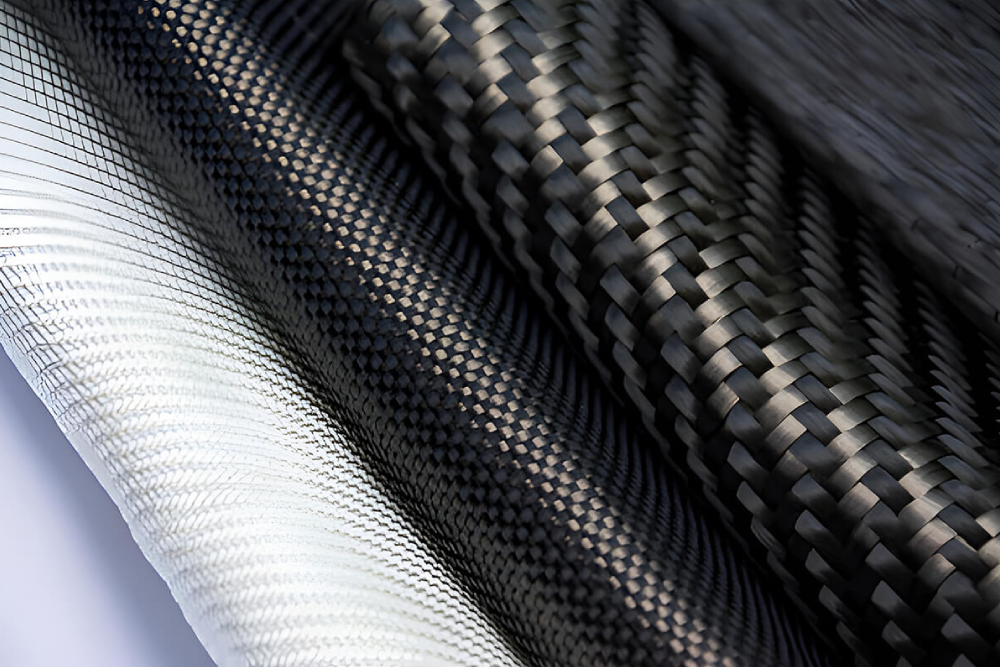
Road networks are subjected to repeated traffic loading, moisture, temperature changes, and subgrade movement. Over time, these factors can contribute to rutting, cracking, loss of aggregate support, and premature pavement deterioration.

Conventional rehabilitation may involve asphalt overlays, localized excavation, or reconstruction of failed pavement layers. Depending on the condition of the existing pavement and subgrade, these approaches can require significant quantities of materials and may result in longer construction periods and traffic disruption.

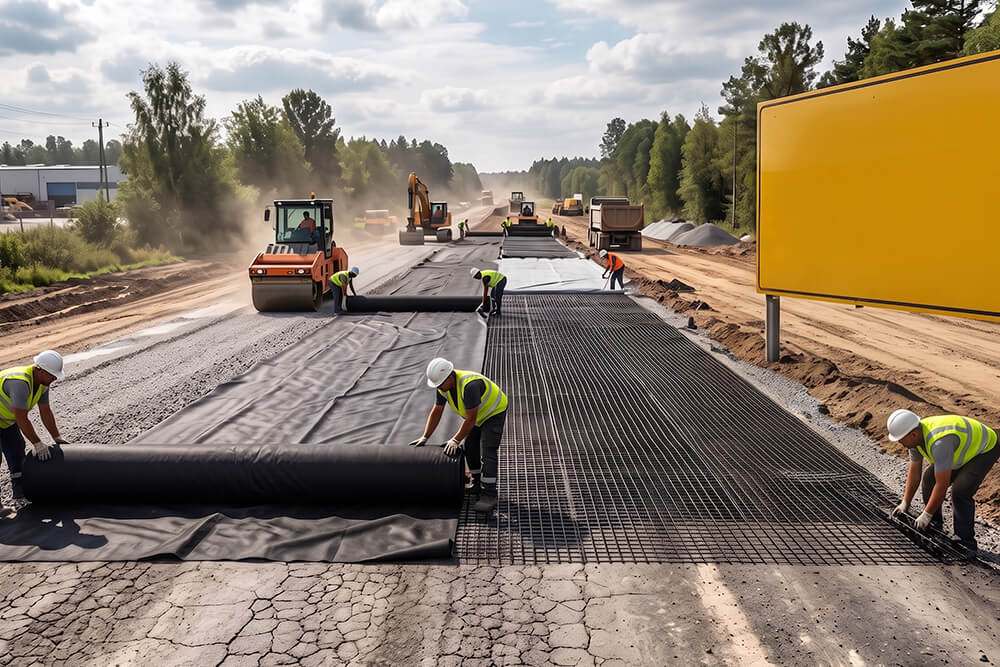
Geosynthetics can be incorporated into pavement rehabilitation to address specific failure mechanisms. Depending on the product and application, geotextiles and geogrids can provide interlayer stress relief, separation, filtration, drainage, or structural reinforcement.

This guide provides a practical overview of common geotextile and geogrid applications in road rehabilitation, together with key considerations for design and installation.

Core Functions of Geosynthetics in Pavement Rehabilitation

When incorporated into pavement or subgrade rehabilitation works, geosynthetics can perform several engineering functions:

Interlayer Stress Relief

Paving fabrics installed between an existing pavement and a new asphalt overlay can help reduce the transfer of stresses associated with existing cracks and joints, depending on pavement condition, material properties, and system design.

Moisture Management

Asphalt-saturated paving fabrics can provide a moisture-resistant interlayer when properly designed and installed. Performance depends on adequate impregnation, bonding, detailing, and surface drainage.

Separation and Stabilization

Geotextiles placed between weak subgrade soils and aggregate layers can reduce intermixing and maintain separation. Stabilization performance depends on geotextile properties, aggregate, subgrade condition, traffic loading, and overall pavement design.

Key Applications in Pavement Rehabilitation

Paving Fabrics as Stress-Relieving Interlayers

Reflective cracking can occur when cracks or joints in an existing asphalt or concrete pavement propagate into a new asphalt overlay under traffic and environmental loading.

How it Works

A paving-grade nonwoven geotextile is typically placed over an asphalt tack coat or binder on the prepared pavement surface before the asphalt overlay is constructed.

Key Benefit

The interlayer can absorb and redistribute localized strains and help delay propagation of existing cracks into the overlay. The degree of improvement varies with pavement condition, crack severity, traffic, climate, overlay thickness, and installation quality.

Moisture Resistance

When adequately saturated with asphalt binder, the fabric can form a continuous moisture-resistant layer beneath the overlay. This function should be considered together with pavement drainage and surface detailing.

Pavement Stabilization over Weak Subgrades

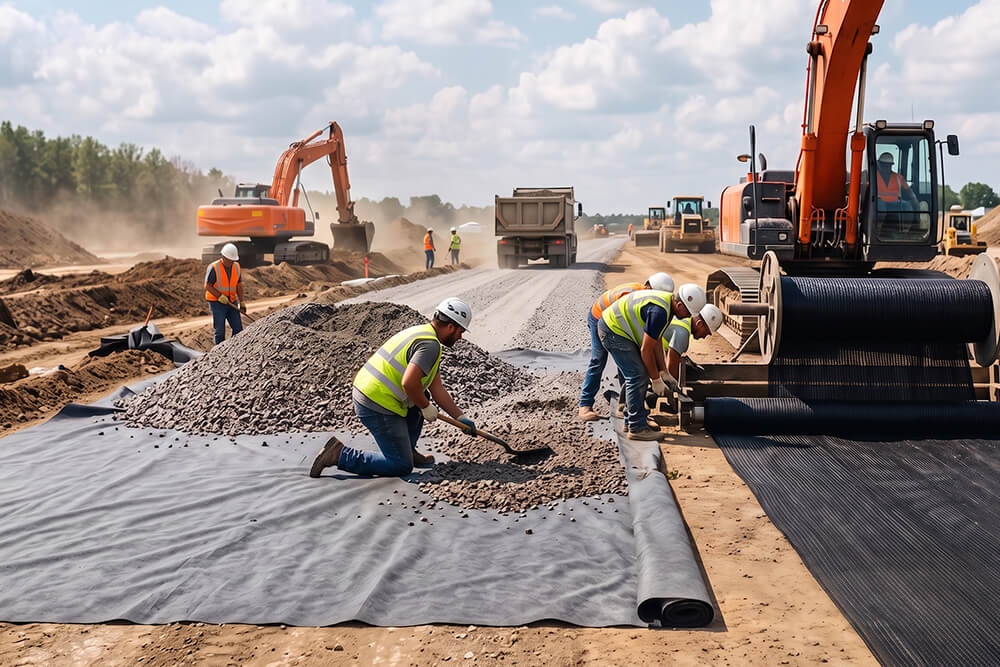
Road rehabilitation over weak or moisture-sensitive subgrades can experience rutting, aggregate contamination, loss of bearing capacity, and deformation under repeated traffic loading. A suitable geotextile can help separate the aggregate from the subgrade and, where appropriate, contribute to stabilization by improving aggregate-layer performance.

AspectWithout GeosyntheticWith Suitable Stabilization Geosynthetic
Subbase / AggregateAggregate may intermix with soft subgrade and become contaminated by fines.Separation helps maintain aggregate quality and layer integrity.
Load DistributionWheel loads can produce localized deformation in weak areas.A suitable stabilization system can improve load distribution and reduce deformation.
Aggregate ThicknessAdditional aggregate may be required where weak subgrade conditions govern.A designed geosynthetic system may reduce aggregate requirements in some applications; this must be verified by design.

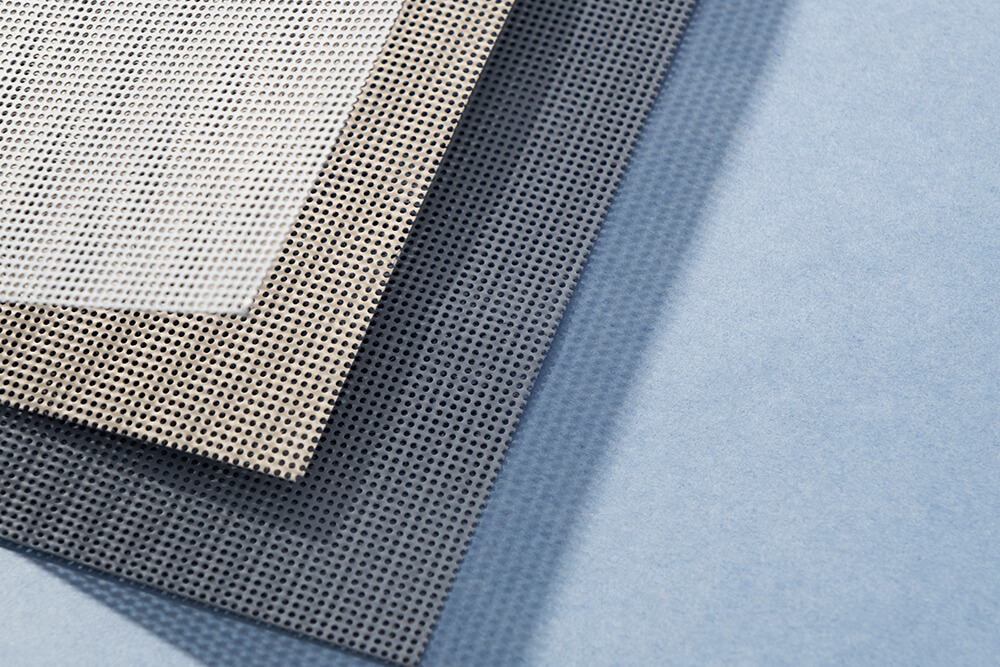
Nonwoven, woven, or composite geosynthetics may be considered depending on whether the primary requirement is separation, filtration, drainage, reinforcement, or a combination of functions. Product selection should be based on project-specific subgrade, aggregate, loading, and hydraulic conditions.

Geotextile Paving Fabrics vs. Geogrids

The appropriate geosynthetic depends on the pavement distress mechanism and the function required. Paving fabrics and geogrids can also be used together in composite pavement rehabilitation systems.

Primary Pavement ConcernCommon Geosynthetic ApproachMain Function
Reflective Cracking / Interlayer DistressNonwoven paving fabric or paving geocomposite.Stress relief and moisture resistance when asphalt saturated.
Soft Subgrade / Aggregate IntermixingSeparation GeotextileSeparation and Filtration
Base Deformation / Heavy Traffic LoadingStabilization geotextile, geogrid or suitable composite.Base reinforcement, separation, filtration and load distribution.
Combined RequirementsStabilization geotextile, geogrid or suitable composite.Combination of separation, drainage and reinforcement functions.

Nonwoven Geotextiles (Paving Fabrics)

Commonly used as interlayers for stress relief and moisture resistance in asphalt overlay rehabilitation.

High-Modulus Woven Geotextile / Geogrids

Used where structural reinforcement is required, particularly for heavily trafficked pavements or where tensile reinforcement is part of the design.
Can combine geotextile and geogrid functions, or provide additional drainage or reinforcement depending on the product configuration.

Critical Engineering & Installation Parameters

Good pavement rehabilitation performance depends on both appropriate product selection and proper site installation. The following parameters should be considered together with the manufacturer's installation recommendations and project specifications.

Surface Preparation & Crack Treatment

  • The existing pavement should be sound, clean, dry, and free of loose material, dust, and contaminants before installation.
  • Existing cracks and defects should be assessed and treated in accordance with the project specification. Larger or active cracks may require appropriate crack sealing or localized repair before the interlayer is installed.
  • Severe structural failures should not be treated solely with a paving fabric; failed pavement and subgrade areas may require excavation, repair, or other structural rehabilitation.

Overlay Thickness, Temperature & Compaction

  • Asphalt mix temperature and placement should follow the paving fabric manufacturer's requirements and the asphalt mix specification.
  • The overlay should provide sufficient thickness to protect the interlayer and achieve the required structural and compaction performance. Minimum thickness should therefore be determined by pavement design rather than applied as a universal value.
  • Construction traffic and paving operations should be controlled to avoid displacement, wrinkling, or damage to the installed fabric.

Summary of Benefits for Road Owners and Contractors

Targeted Rehabilitation

Geosynthetics can address specific pavement mechanisms such as reflective cracking, aggregate contamination, and weak subgrade conditions.

Reduced Construction Disruption

Where existing pavement and subgrade are suitable for rehabilitation, geosynthetic systems may reduce the extent of excavation and reconstruction.

Improved Pavement Performance

Properly designed systems can help control crack propagation, maintain aggregate separation, and improve pavement-layer performance.

Lifecycle Consideration

Potential reductions in maintenance frequency, material quantities, and construction disruption should be evaluated as part of a project-specific lifecycle assessment.

Conclusion & Next Steps

Geosynthetics provide practical solutions for pavement rehabilitation when the product and installation method are matched to the underlying failure mechanism. Paving fabrics are commonly used as interlayers for stress relief and moisture resistance, while stabilization geotextiles and geogrids can address separation, aggregate confinement, and reinforcement requirements.

Successful application requires assessment of the existing pavement, subgrade, and drainage conditions, followed by appropriate product selection, design, surface preparation, installation, and quality control. NovaGeo Asia can support pavement rehabilitation projects from product selection and technical assessment through to site installation support.


Share this post

Related Blog