Riverbanks and waterways face continuous hydrodynamic pressure from water currents, fluctuating water levels, rain wash, and seasonal flooding. Left unmanaged, riverbank erosion leads to severe loss of valuable land, damage to nearby civil infrastructure, and excessive sedimentation in downstream water bodies.

While traditional erosion control methods such as plain stone riprap or mass concrete walls have historically been used to armor riverbanks, they often suffer from long-term failure when fine subgrade soil washes out from behind or beneath the structure.

Modern hydraulic engineering solves this problem by using engineered geotextiles. Whether applied as flexible filter layers beneath heavy rock armor, woven reinforcement mats, or sand-filled structural containers, geotextiles provide a reliable, long-lasting, and environmentally friendly barrier against hydraulic erosion.

Here is an engineering guide to how vải địa kỹ thuật work in riverbank protection, their primary applications, and critical design considerations.

Why Riverbanks Fail: The Mechanics of Bank Erosion

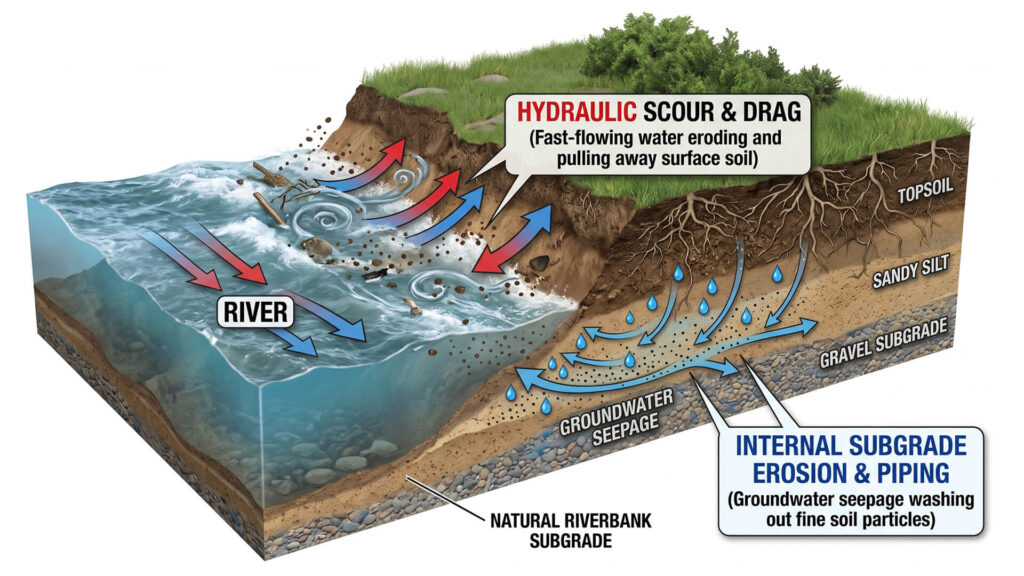
To understand how geotextiles protect riverbanks, we must first look at the two main drivers of bank failure:

Hydraulic Scour

High-velocity water currents directly scour and shear exposed bank soil away during high-flow conditions.

Piping and Loss of Fines

As river levels rise and drop, water flows into and out of the riverbank. This dynamic seepage creates hydrostatic pore-water pressure. Without a proper filter layer, fine soil particles wash out through the voids of heavy armor layers (such as rock riprap or gabions), causing structural undermining and collapse.

Core Functions of Geotextiles in Riverbank Protection

Geotextiles perform four main functions in river engineering:

Filtration

Allowing groundwater seepage to drain freely into the river channel while holding native soil particles securely in place.

Separation

Keeping fine riverbank soils separate from coarse stone or gravel layers to prevent intermixing and loss of structural stability.

Erosion Control & Containment

Shielding vulnerable bank surfaces or containing local fill material inside high-strength fabric units.

Reinforcement

Supplying tensile strength to stabilize steep cut slopes and embankment fill over soft alluvial clays.

3 Common Applications of Geotextiles in River Works

1. Geotextile Filters Under Rock Riprap & Gabion Mattresses

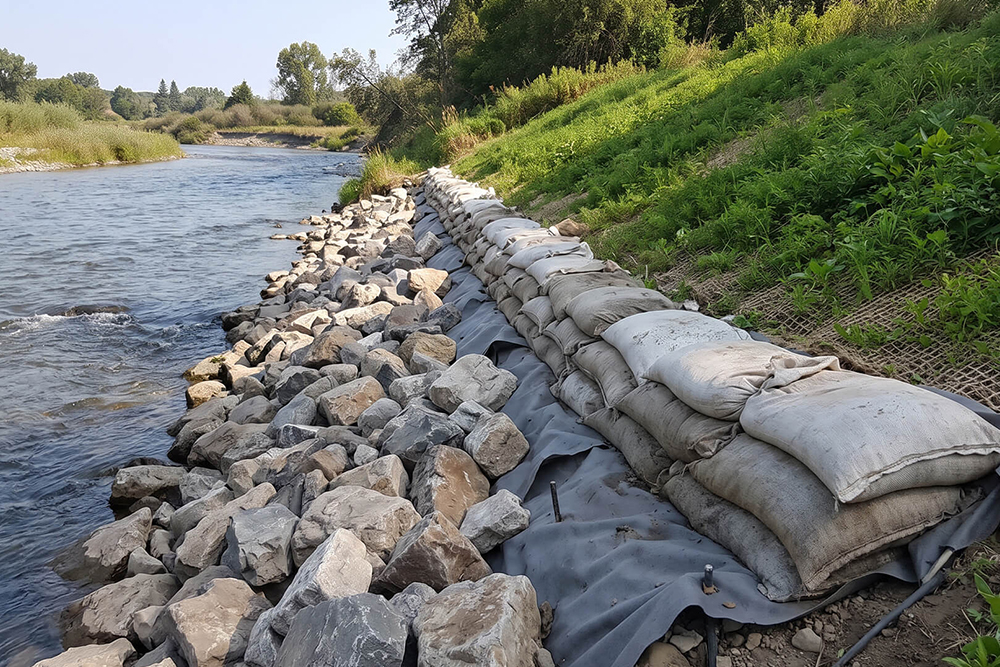
Placing heavy rock riprap or gabion mattresses directly on bare riverbank soil is a common cause of bank failure. Hydrodynamic suction and groundwater outflow easily draw fine subgrade soils through the large voids in rock layers.

How It Works

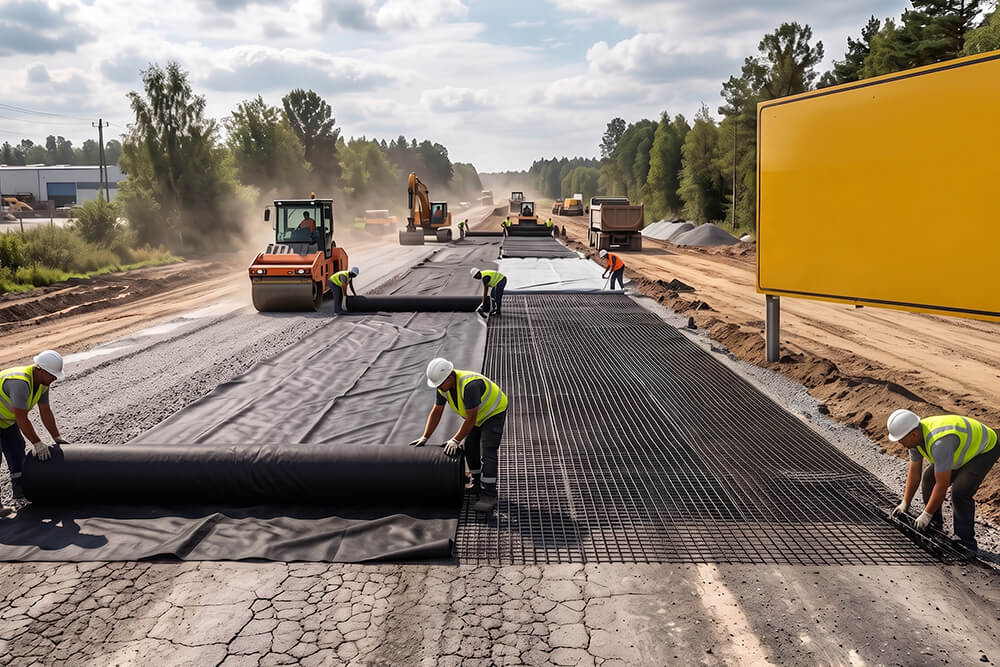
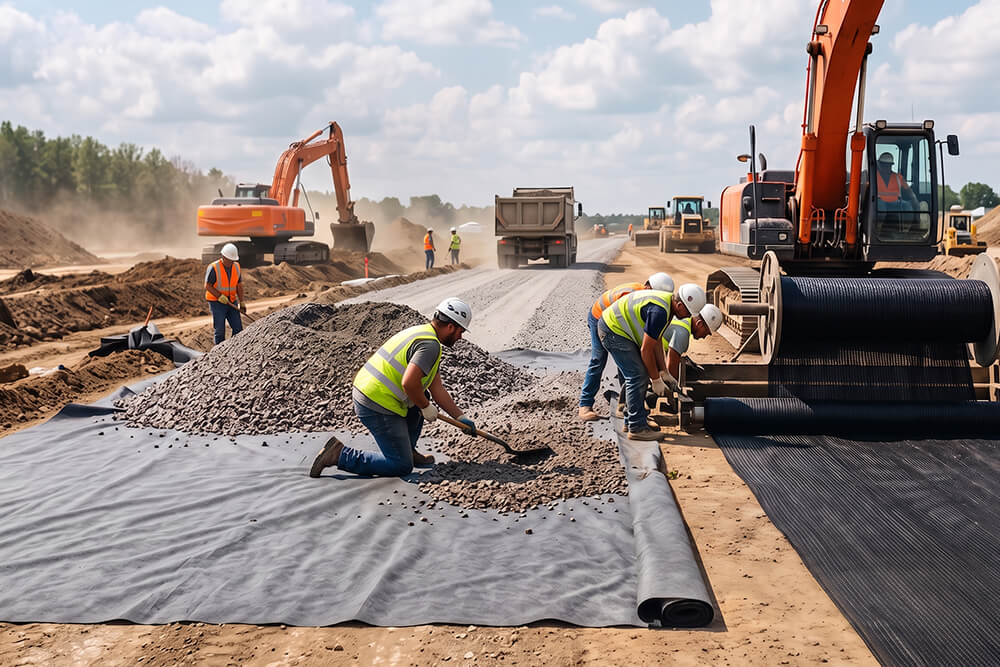
High-mass non-woven geotextiles or specialized woven filter fabrics are laid directly on the graded riverbank slope before placing stone armor or gabion mattresses.

Engineering Benefit

The geotextile acts as an engineered filter. It lets water pass through freely to prevent pore-water pressure buildup while retaining subgrade fines. This replaces costly multi-layer graded aggregate stone filters, lowering excavation depth and material transport costs.

2. Geotextile Sand Containers (GSCs) & Geotextile Bags

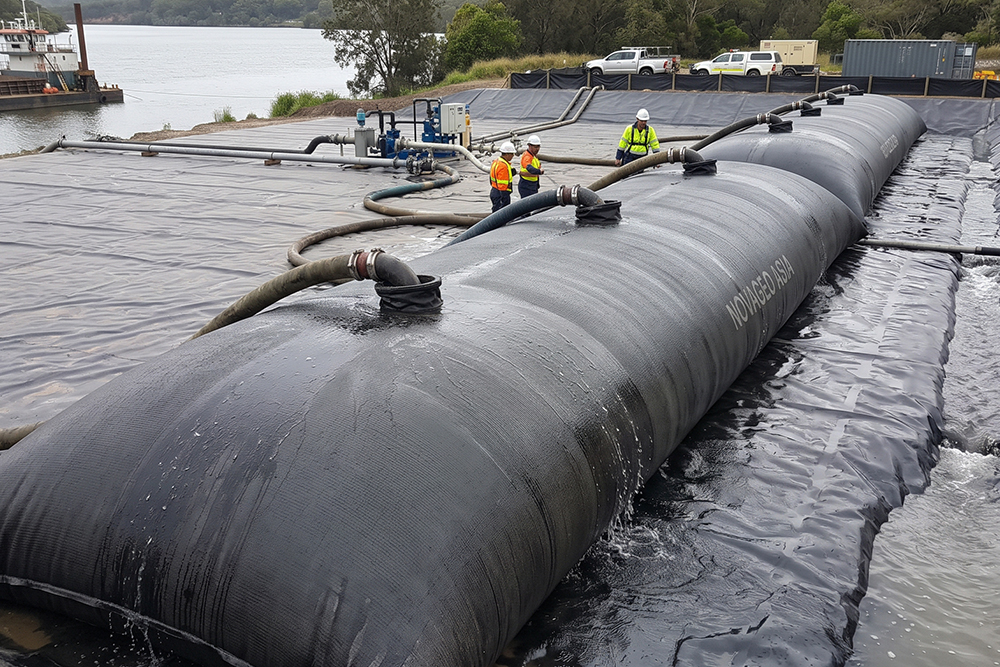
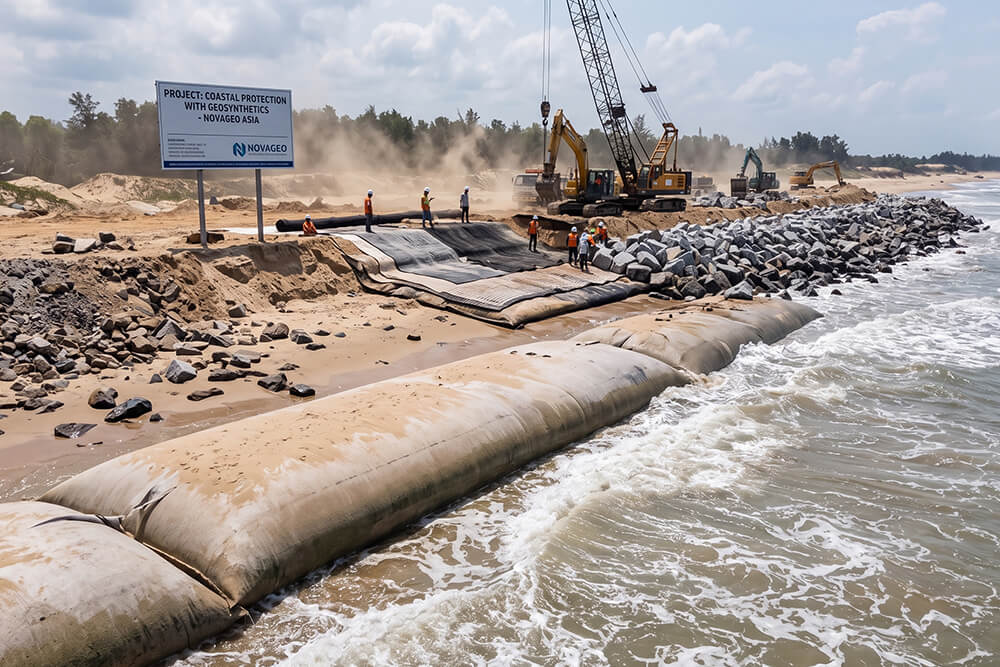
In environmentally sensitive zones, narrow river sections, or locations where heavy rock riprap is too expensive or difficult to deliver, Geotextile Sand Containers (GSCs) offer a flexible, cost-effective alternative.

How It Works

Heavy-duty, needle-punched non-woven geotextile bags are filled with locally dredged river sand or gravel and stacked in a stepped arrangement along the bank.

Engineering Benefit

GSCs absorb wave and current energy, conform naturally to subgrade settlement without cracking, and allow natural vegetation and marine flora to grow over time.

3. Vegetated Geotextile Slope Protection (Bioengineering)

For mild to moderate slope gradients, combining geotextiles with natural bioengineering techniques creates a soft, green bank protection system.

System LayerPrimary FunctionIdeal Application
Non-Woven Geotextile Mat / Turf MatSurface soil retention & seed anchoringBank slopes above mean high-water line
Vegetation Root MatrixLong-term soil binder & natural energy dissipationUpper riverbank & flood plain zones
Toe Protection (GSC / Rock Toe)Structural protection against toe scourSubmerged bank base & waterline zone

How It Works

Open-structure non-woven mats or composite geotextile blankets protect topsoil against rainwash and low-velocity currents while root systems take hold. As vegetation grows, the plant roots interlock with the synthetic matrix to form a permanent, reinforced bank lining.

Key Design Parameters for Waterway Geotextiles

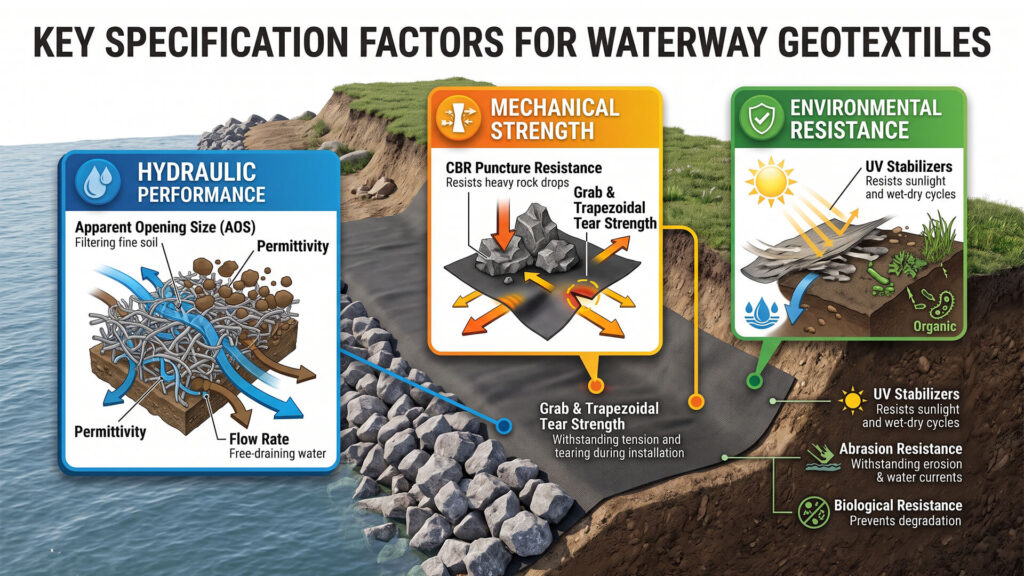
When specifying geotextiles for riverbank engineering, pay close attention to these core parameters:

Hydraulic Permittivity & AOS

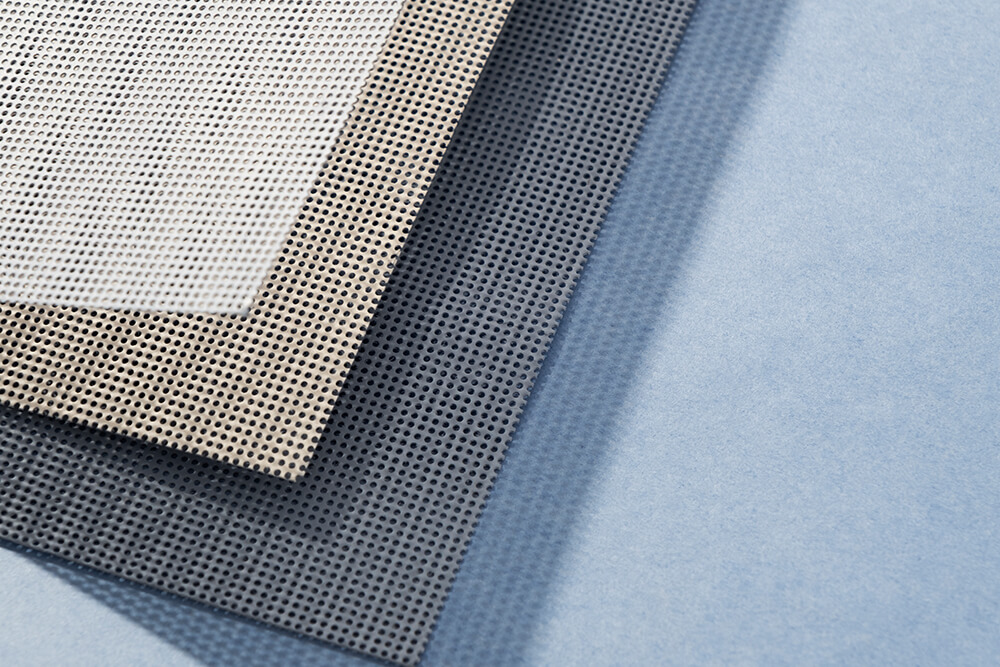
The geotextile's Apparent Opening Size (AOS) must match the native soil's grain size distribution (d85) to retain subgrade fines while allowing fast water discharge.

Puncture & Abrasion Resistance

The material must withstand high mechanical impact when heavy stones or gabion baskets are dumped or placed on top during construction.
Because riverbank zones experience alternating wet-dry cycles and sun exposure, specifying high-quality polypropylene polymers with added carbon black or UV stabilizers ensures long-term service life.

Field Installation Best Practices

Proper Toe Anchorage

Always extend the geotextile filter down into an anchor trench at the toe of the bank (below the maximum predicted bed scour depth) to prevent undercut failure.

Sufficient Overlaps

Ensure minimum seam overlaps of 300 - 500mm (or structural factory/field sewing) along slope joints to keep fine soils from washing through gaps under dynamic flow.

Controlled Stone Placement

Avoid dropping heavy riprap stones from height directly onto the geotextile. Keep drop heights low or place a sacrificial soil/gravel buffer layer to protect the filter fabric.

Conclusion & Next Steps

Geotextiles play a vital role in modern river engineering. By serving as effective separation filters, erosion barriers, and foundation stabilizers, they extend the service life of riverbank protection works while keeping construction costs manageable.

Ready to improve your river protection efforts via reliable geosynthetics? Visit Novageo Asia today and reach out to us to find out more about our geotextile products today!


Chia sẻ bài viết này

Bài viết liên quan