










High-Performance Non-Woven Geotextile
โนวาเท็กซ์ NW
Engineered to filter, separate, drain and protect.
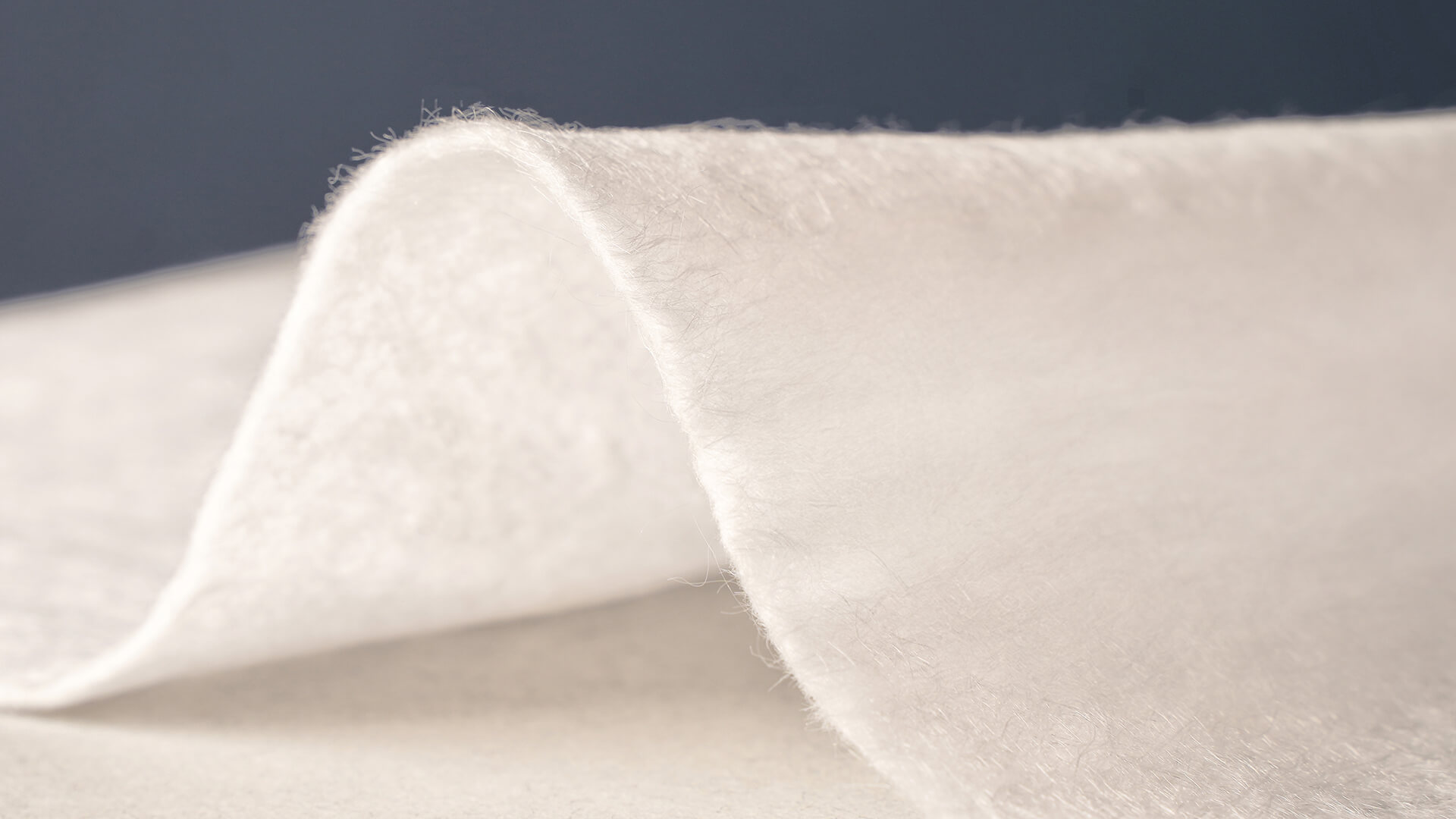
NovaTex NW is a needle-punched non-woven geotextile range based on polypropylene (PP) or polyester (PET) fibres. Its permeable, felt-like structure supports soil retention, water movement, layer separation and cushioning in civil infrastructure and environmental works.
ผ้าไม่ทอแบบเจาะรูด้วยเข็ม
Filtration & Drainage
Soil Separation
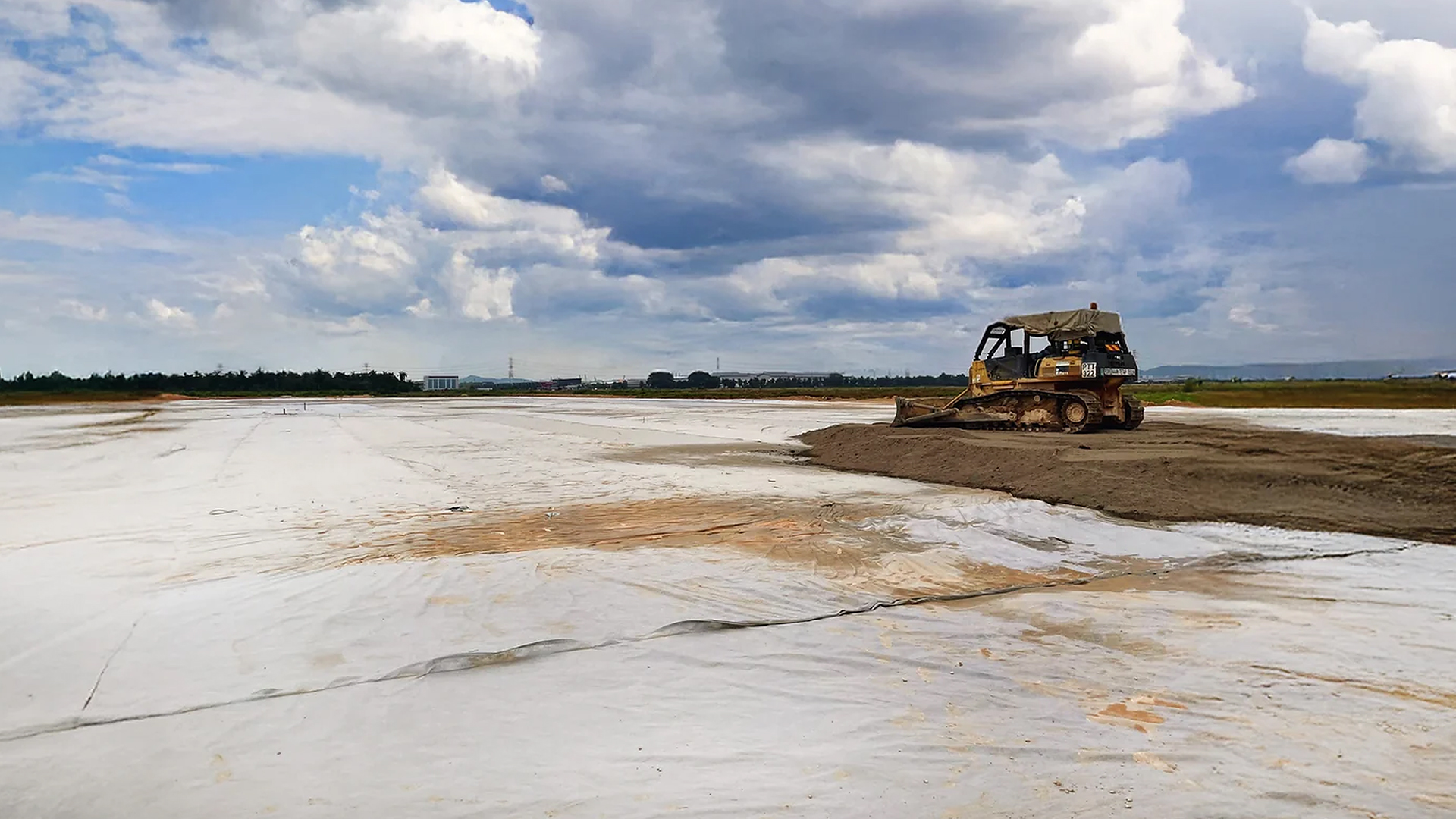
NovaTex NW - site photograph from company brochure
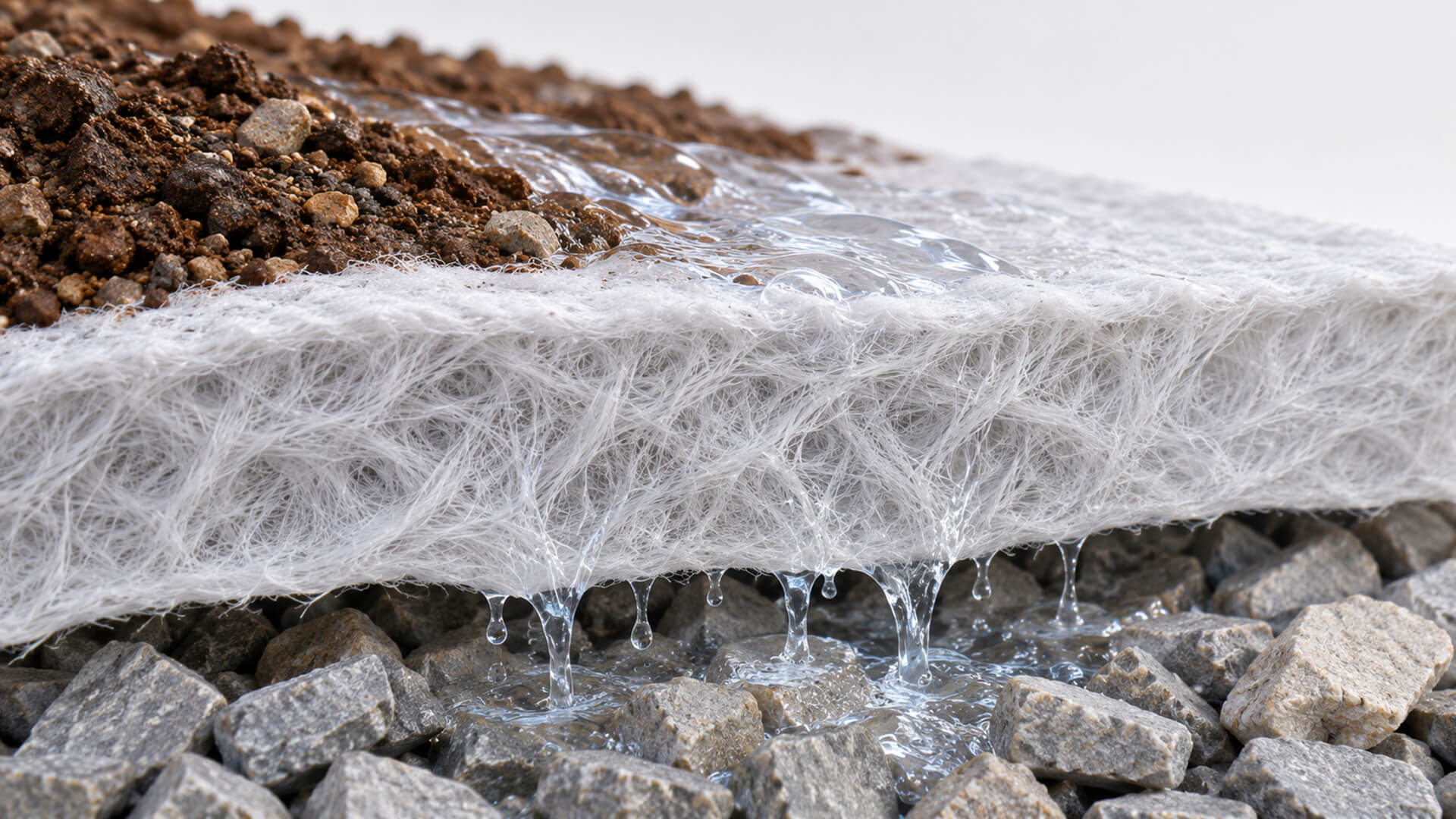
Designed to separate soil while allowing water to move.
Product Overview
Water Moves Through. Soil Stays Where It Belongs.
NovaTex NW consists of needle-punched non-woven geotextiles made with polypropylene or polyester fibres. The product brochure describes grades manufactured from 100% virgin polypropylene or polyester continuous-filament yarns, while the supplementary product document highlights a flexible, felt-like needle-punched structure.
Its interconnected fibre network is designed to allow water to pass through while retaining fine soil, maintaining separation between layers, and helping protect sensitive liners. Appropriate filtration, drainage and protection performance depends on the selected grade and site conditions.
Why NovaTex NW
Performance Built into The Fibres
Combining the original NovaTex NW brochure with the supplementary product document: a permeable non-woven structure that supports multiple engineering functions.
01 / 03
High Flow with Fine-Soil Retention
A porous needle-punched fibre structure supports filtration by allowing water through while retaining soil particles when a compatible filter grade is specified.
02 / 03
Separation & Cushioning
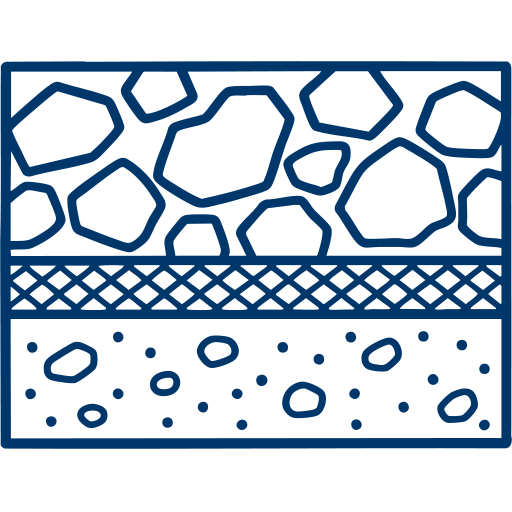
The flexible, felt-like fabric helps separate soil and aggregate layers and provides a cushioning protection layer for geomembranes and liners.
03 / 03
Engineered for Different Requirements
Available across mechanical, hydraulic and physical property grades. The brochure states nominal mass up to 1,200 g/m2 and rolls up to 6 m × 200 m.
Material Construction
A Flexible Fibre Network With Multiple Jobs To Do
The supplementary NovaTex Non-Woven document describes a three-dimensional, needle-punched fibre network. Its interconnected voids create pathways for water movement, while the felt-like structure contributes to separation and protective cushioning.
Engineering Application
Brochure Details. Real Engineering Functions.
Five application schematics from the NovaTex NW brochure illustrate filtration, separation, drainage and geomembrane protection. Select any drawing to inspect the original labels.
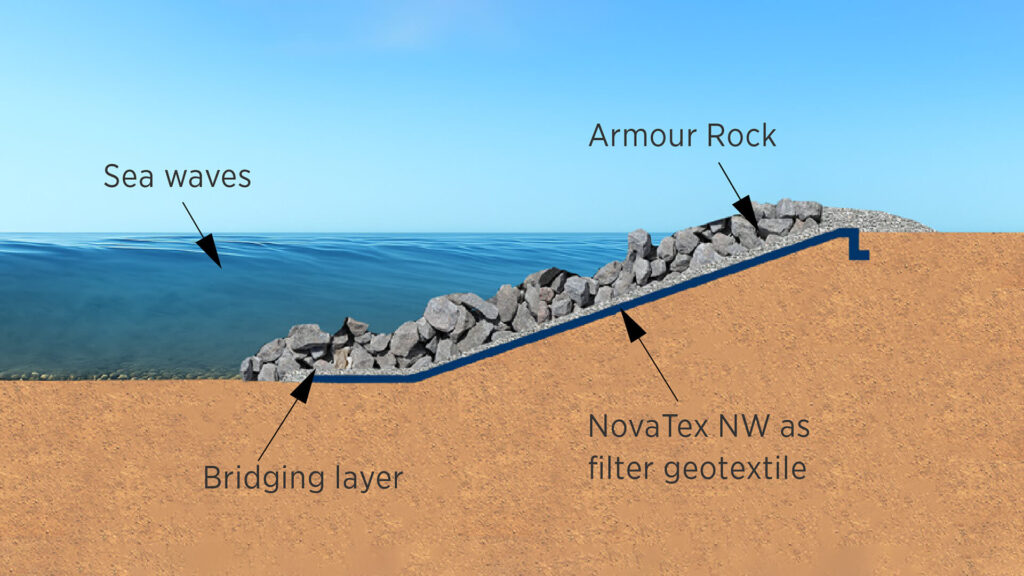
Rock Revetment System
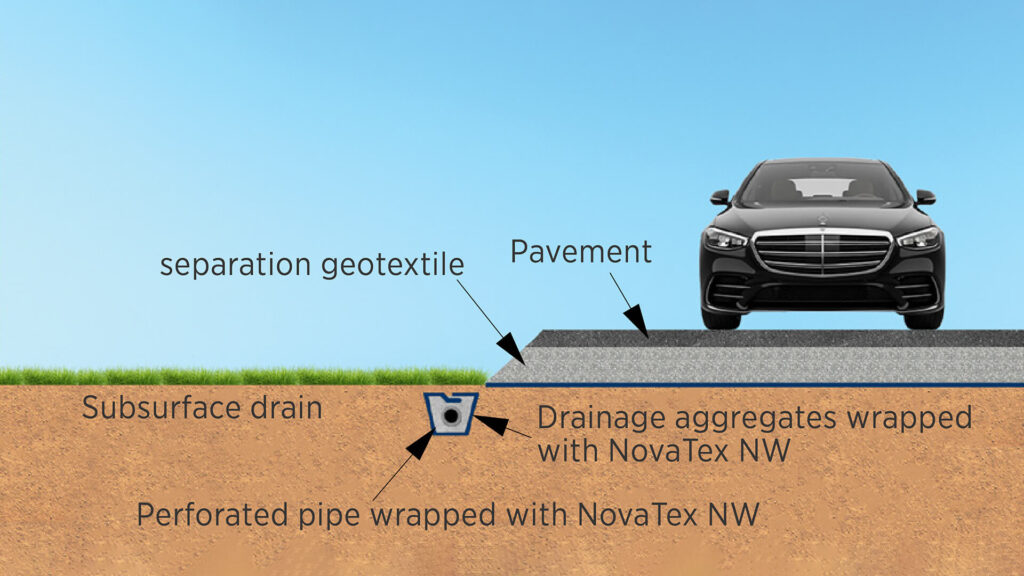
Subgrade Stabilization & Subsurface Drainage System
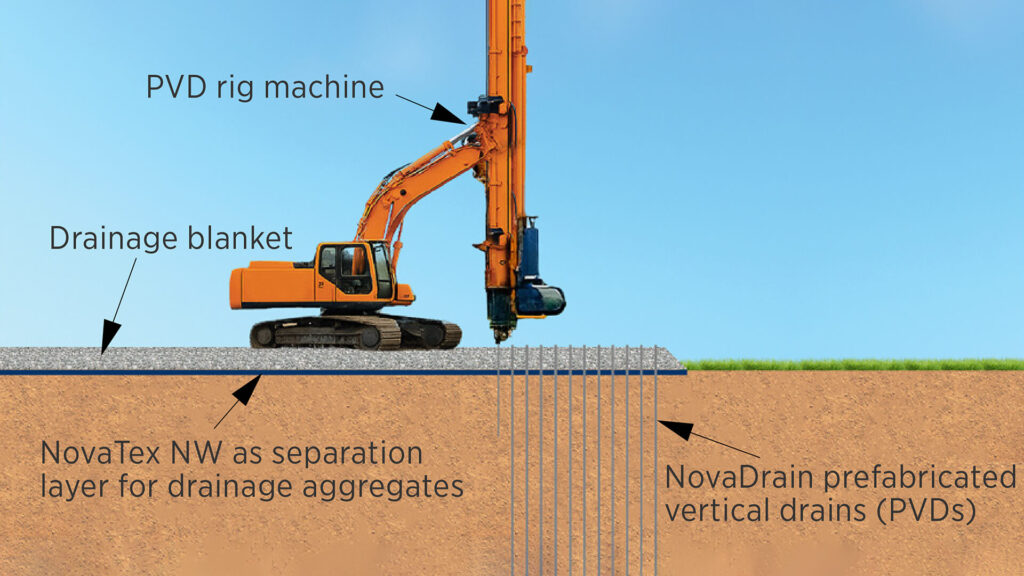
Drainage Blanket in PVD Treatment
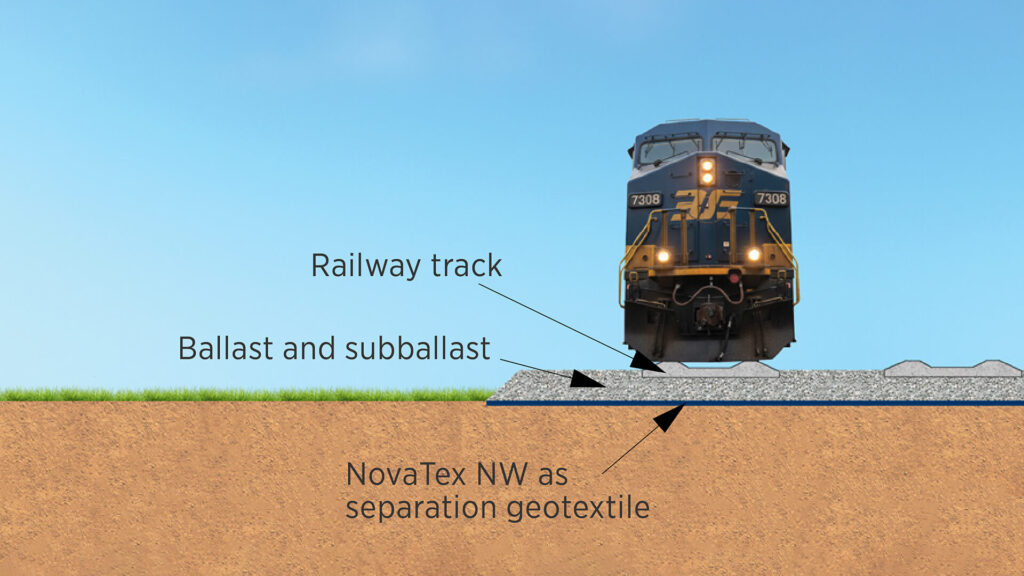
Railway Track Stabilization
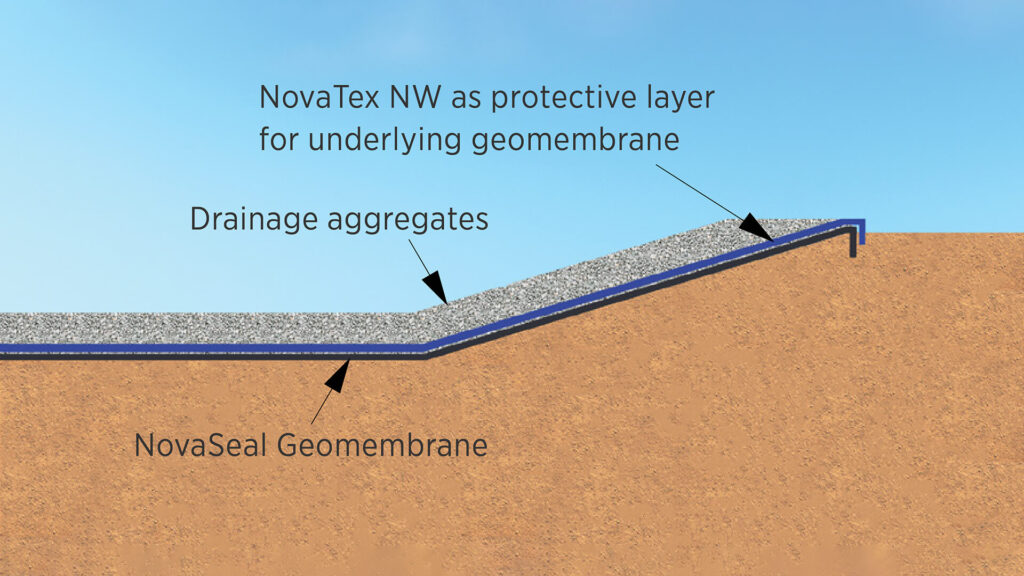
Geomembrane Liner Protection in Landfill
Core Functions
Four Essential Functions. One Versatile Fabric.
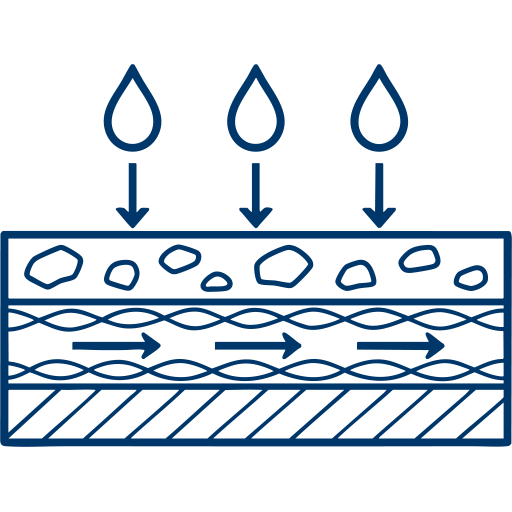
The brochure identifies four core functions; the supplementary document explains how the needle-punched structure performs them.
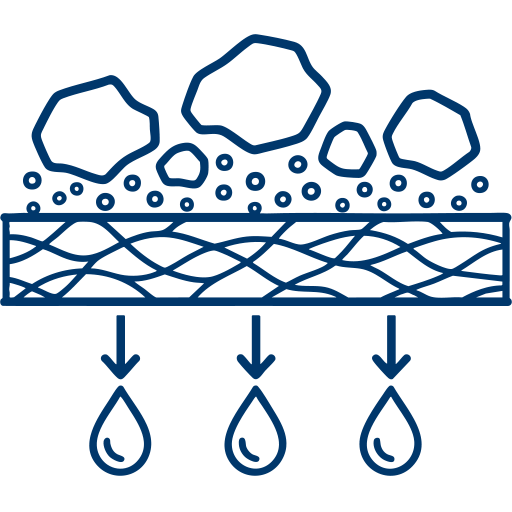
การกรอง
ระบบระบายน้ำ
การแยกจากกัน

Protection
Typical Applications
Applications Across Ground, Water & Infrastructure
Six established examples from the company brochure, supplemented by erosion control, silt fences and landscaping uses described in the new document.
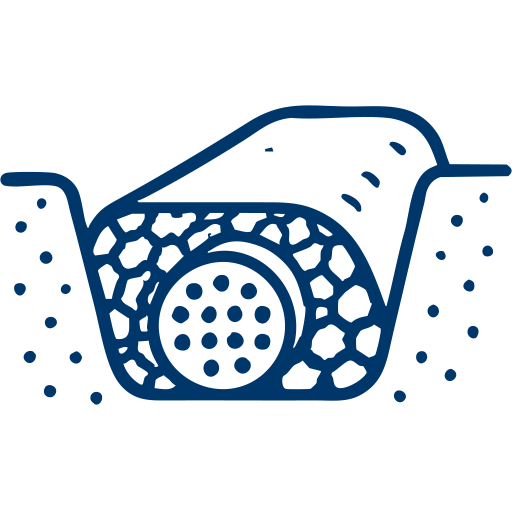
Application 01
Subsurface Drainage Systems
Geotextile wrapping around drainage aggregate and perforated pipes helps create a filtering drainage pathway.
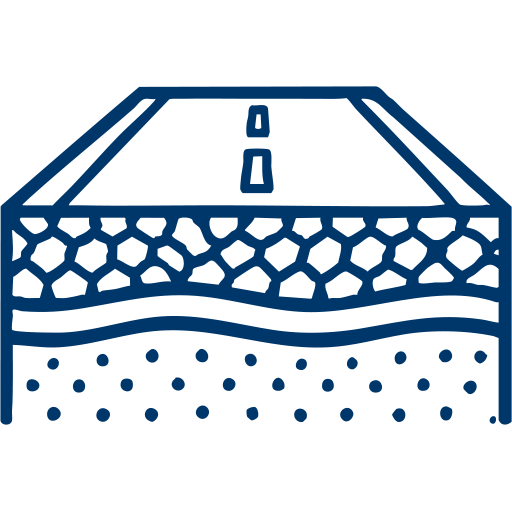
Application 02
Subgrade & Roadway Stabilization
Separates subgrade soil from base aggregates, limiting mixing and helping maintain layer integrity.
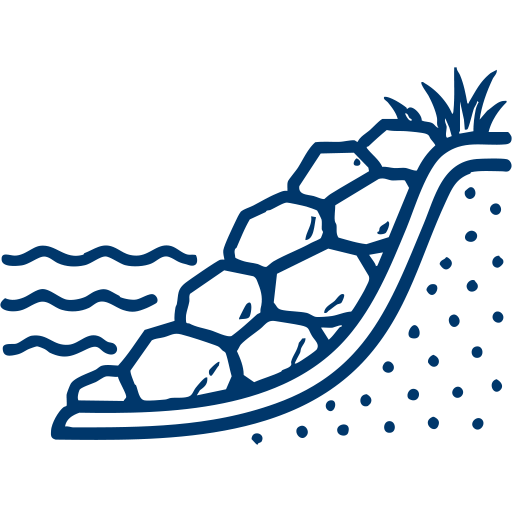
Application 03
Rock Revetment Systems
Provides a filtration layer beneath rock armour, allowing water flow while retaining bank soils.
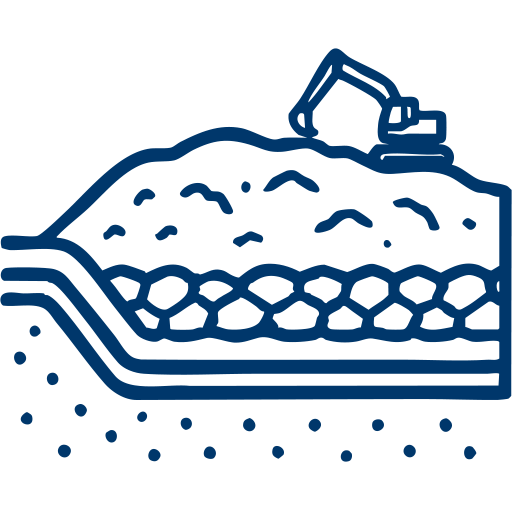
Application 04
Landfill Geomembrane Protection
Cushions geomembrane liners from sharp aggregates and localized contact stresses.

Application 05
Drainage Blankets in PVD Treatment
Separates drainage aggregates within prefabricated vertical drain ground improvement systems.
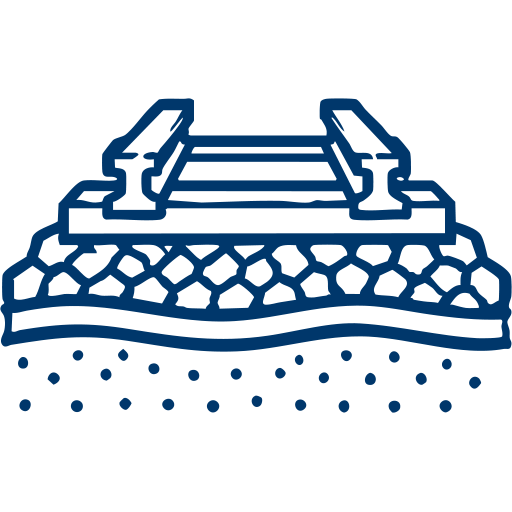
Application 06
Railway Track Stabilization
Separates ballast and subballast from underlying soils in railway track formations.
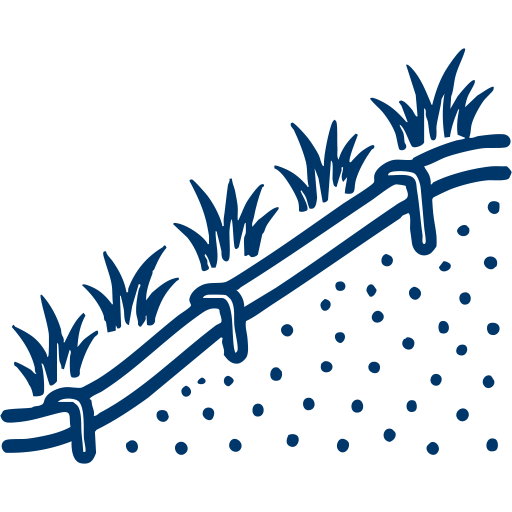
Application 07
Slope & Surface Erosion Control
Can form a conforming layer over exposed slopes and embankments to support soil retention and water passage.
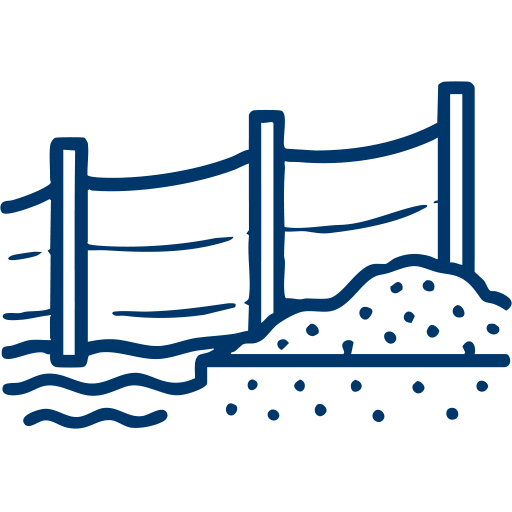
Application 08
Construction Silt Fences
Used as temporary sediment-filter fabric in perimeter barriers where properly supported and installed.

Application 09
Landscaping & Hardscapes
Separates soil, mulch and decorative aggregates in planting areas and hardscape installations.
Product Details
Select The Right Grade For The Job
The two sources describe material construction and a range of roles; the original brochure supplies the published maximum nominal mass and roll dimensions.
Frequently Asked Questions
Choosing The Right Non-Woven Geotextile
Questions and answers adapted from the supplementary NovaTex Non-Woven Doc.pdf, with project-dependent performance qualifications retained.
Woven geotextiles use interlaced yarns and are often selected for high-strength reinforcement. Needle-punched non-woven geotextiles use a randomly distributed, felt-like fibre network that supports filtration, drainage, separation and liner protection. The appropriate choice depends on the design function and required properties.
The three-dimensional fibre structure offers multiple pathways for water to travel while retaining soil particles. Appropriate opening size, permeability and soil-filter compatibility are important for reducing the risk of clogging over time.
The flexible cushioning layer can absorb some localized contact stresses and help protect a geomembrane against puncture or abrasion from rock and coarse subgrade materials. Required mass and puncture performance must be selected for the design conditions.
The fabric can conform to irregular slope surfaces, supporting soil retention and water passage within a suitable erosion-control system. Anchorage, cover materials and hydraulic conditions remain important to the design.
Effective separation may help keep aggregates from mixing with soft subgrade soils, potentially reducing replacement materials and maintenance. Actual savings depend on the project, material selection and installation.
Let's Build Something Stronger
Need The Right Filtration or Protective Geotextile?
Discuss filtration, soil separation, in-plane drainage, erosion control or liner protection with NovaGeo Asia. Our team can help identify the NovaTex NW option that fits your project conditions.