Managing high-volume slurry, industrial effluent, municipal wastewater sludge, and dredged sediment presents major operational and cost challenges for plant managers, civil contractors, and environmental engineers. Storing or hauling high-water-content waste incurs massive transport fees, occupies vast land footprints, and increases environmental liability.
Traditional mechanical dewatering equipment such as belt filter presses, filter presses, and centrifuges often requires significant capital expenditure (CAPEX), continuous power consumption, and frequent maintenance.
Geotextile dewatering tubes (commonly referred to as Geotubes) provide a high-volume, passive, and cost-effective containment and dewatering alternative. By combining engineered woven geotextile fabrics with polymer conditioning, geotextile tubes achieve high-solids consolidation and volume reduction in a single continuous process.
Here is an engineering guide to how geotextile dewatering systems work, their core operational stages, key applications, and design best practices.
A geotextile dewatering tube is a large-scale, high-strength tubular container fabricated from engineered woven polypropylene geotextiles. Designed with specialized pore structures, the geotextile shell retains fine solid particles inside while allowing clear filtrate water to pass outward through the fabric under hydraulic pressure.
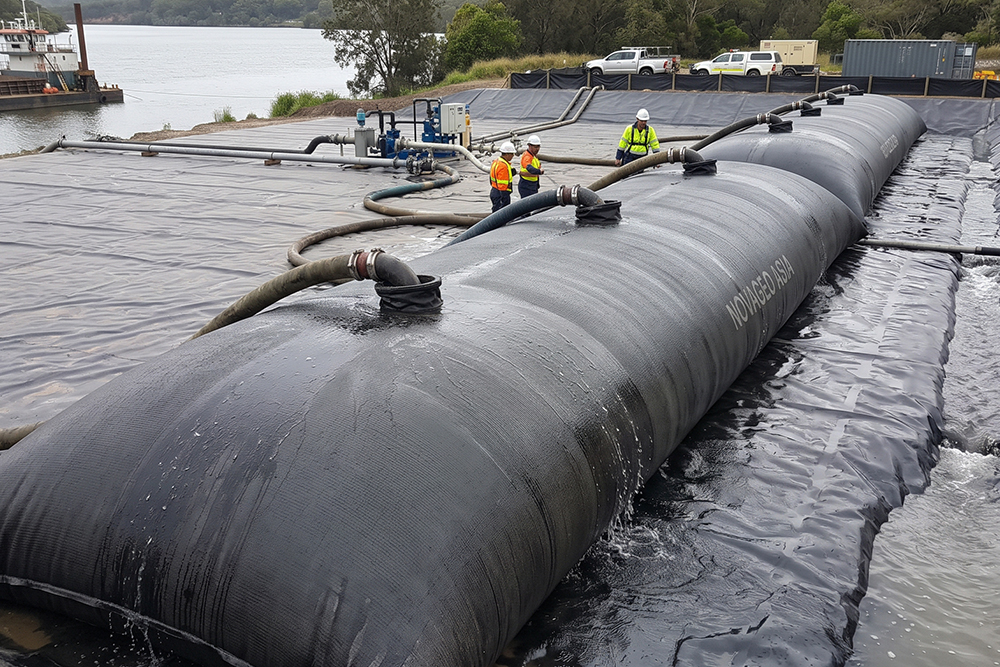
As slurry is pumped into the tube, the fluid pressure forces water out through the permeable geotextile walls while solids are trapped inside. Over time, the internal cake consolidates into a dry, stable material that can be easily handled, transported, or repurposed.
Achieving optimal solids retention and rapid effluent discharge relies on a structured three-stage process:
Raw slurry or sludge contains fine, suspended particles that carry negative surface charges, keeping them dispersed in water. Before pumping slurry into the geotextile tube, an organic polymer or coagulant is injected into the feed line.
The conditioned slurry is hydraulically pumped directly into the geotextile tube via specialized filling ports (snouts).
Once pumping ceases, the passive consolidation phase begins.
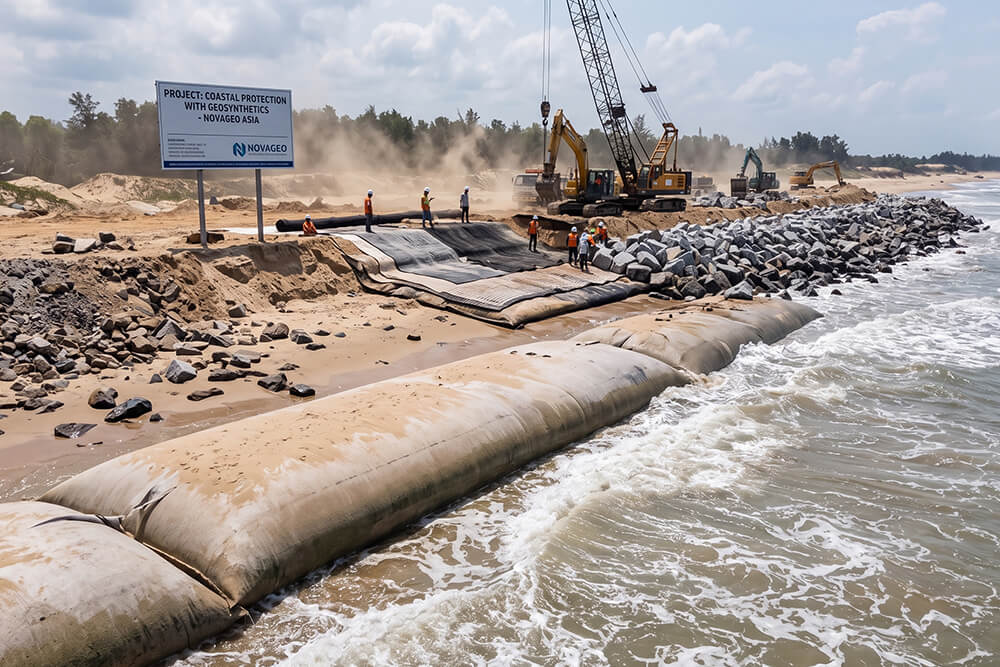
Geotextile tube pengeringan is widely specified across municipal, industrial, marine, and mining sectors:
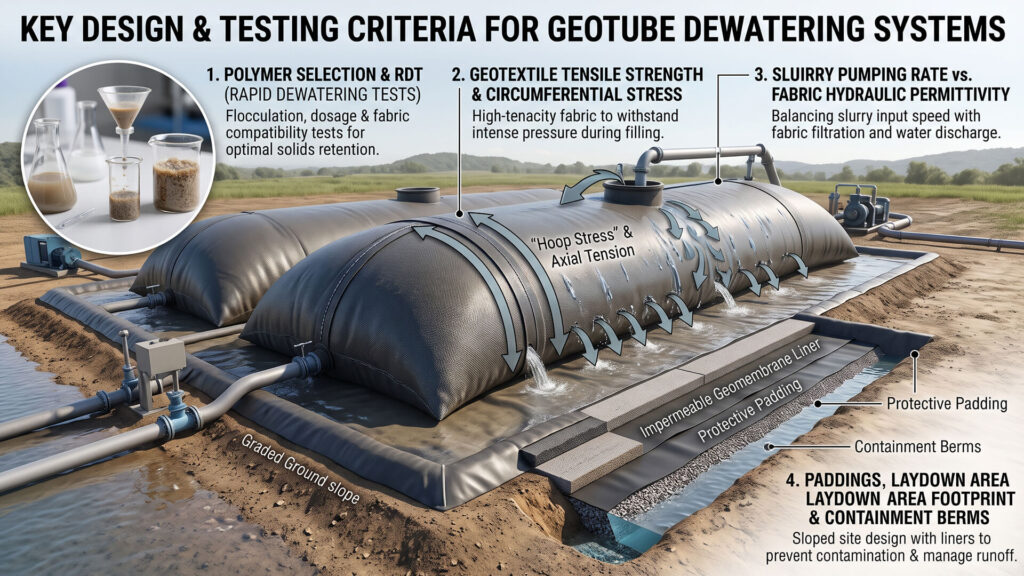
To ensure successful field performance, civil and environmental engineers evaluate several critical parameters prior to installation:
Lab bench testing using actual site slurry samples is critical to determine the correct polymer dosage, mixing energy, and fabric compatibility. RDT evaluates filtrate clarity, flow rate, and cake dryness.
During filling, hydraulic pressure generates significant hoop stress (circumferential tension) and axial tension on the geotextile container shell and factory seams. The woven geotextile must possess high ultimate tensile strength and seam joint integrity to prevent bursting or rupture during filling operations.
The dewatering pad must be graded with a slight slope toward drainage channels. In applications involving contaminated sediment or hazardous industrial sludge, the laydown pad must be lined with an impermeable geomembrane layer to prevent underlying ground contamination.
Geotextile dewatering systems offer an efficient, scalable, and economical solution for managing high-water sludges, dredged mud, and industrial effluents. By combining chemical flocculation with high-strength engineered geotextiles, site operators can achieve significant volume reduction, recover clear process water, and streamline material handling.
To learn more about our geotextile dewatering tubes, along with our technical sizing calculations, and site engineering support, visit Novageo Asia and contact us for more details.