

Geogrids are essential for soil reinforcement in diverse construction applications.
They enhance load-bearing capacity, stabilize slopes, and ensure long-term structural integrity.
Geogrids are key geosynthetic components commonly used in construction projects across several industrial sectors, including civil engineering, transportation and infrastructure, and waste management. They are made from polymer materials such as polyester, polypropylene, and polyethylene, and are designed in an open grid or mesh structure.
The purpose of geogrids are to reinforce and stabilize the soils for those sectors, and are ideal geosynthetics in doing so as they have unique properties that allow them to easily perform these tasks. These characteristics include having high tensile strength both in uniaxial and biaxial geogrids, and being made with open holes to allow soils to interlock efficiently. This allows for soil to increase their load-bearing capacity, as well as stabilise slopes and keep soil layers separated, which supports structures that are above the soft and weak soils. With these important functions, geogrids are used commonly in roads, railways, retaining geogrid walls, embankments, and slopes.
NovaGeo offers top tier and trusted geogrids Malaysia to contractors with their product NovaGrid, a custom engineered geogrid that has proven experience in both testing and the field. NovaGrid is a reliable geosynthetic solution for contractors, delivering results while lowering the operation costs.
Suggested Products For Application
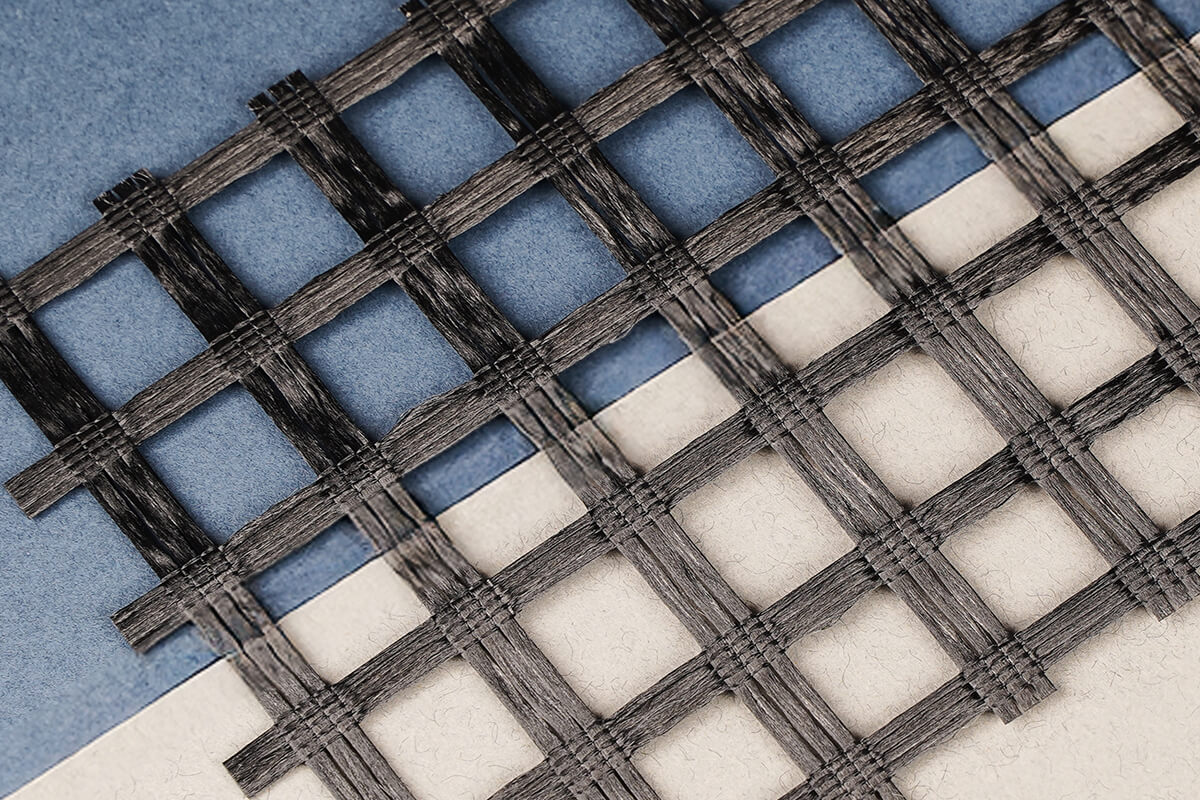
NovaGrid
NovaGrid are high-performance soil reinforcement products designed for mechanically stabilized earth (MSE) applications, such as walls, slopes, embankments, and berms. Backed by extensive performance testing, NovaGrid offers reliable vertical grade change solutions, delivering cost-effective and efficient design outcomes.
FAQs
A geogrid is used to reinforce soil and other materials in construction and civil engineering projects. It provides structural stability by distributing loads over a wider area, which helps prevent shifting, sinking, or erosion. Geogrids are commonly used in retaining walls, roadways, slopes, embankments, and railway tracks to improve load-bearing capacity and extend the life of the structure.
A geogrid works by reinforcing soil through a process called mechanical interlock, where soil particles lock into the grid’s open structure. This interaction strengthens the soil, distributes loads more evenly, and prevents shifting or settling. By doing so, geogrids improve stability and support in structures like roads, retaining walls, and slopes.
A geogrid is a synthetic, grid-like material used in construction to reinforce soil and other ground materials. Made from polymers such as polyester or polypropylene, it has open spaces (apertures) that allow soil to interlock with the grid, providing added strength and stability. Geogrids are commonly used in retaining walls, roadways, embankments, and slope reinforcement.
Geogrids can be purchased from construction supply stores, geosynthetics distributors, and online retailers. Major manufacturers like NovaGeo, Tensar, and Maccaferri often have local dealers or representatives.