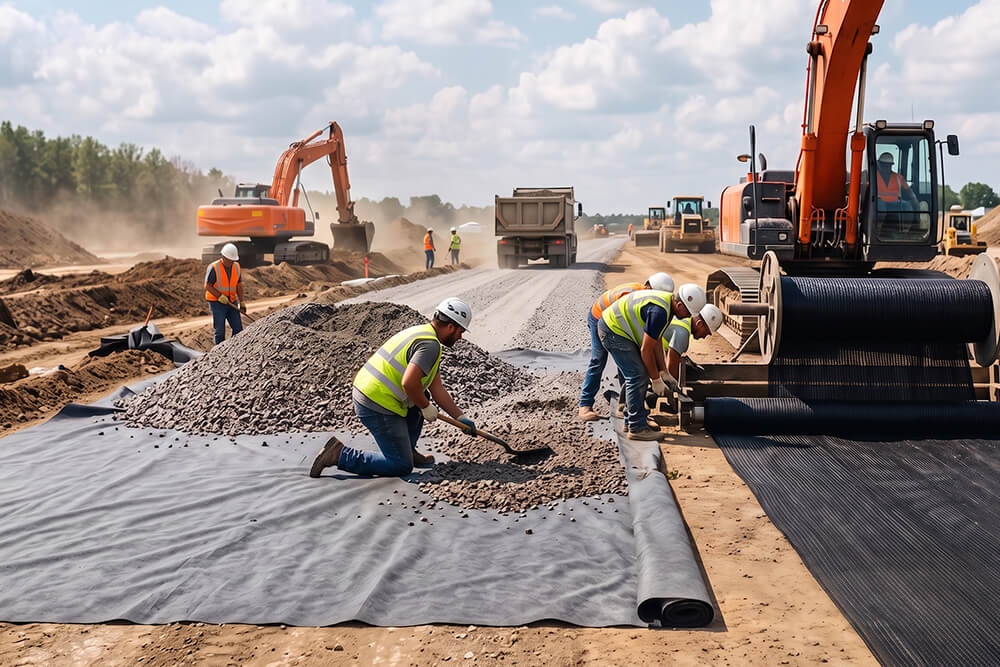
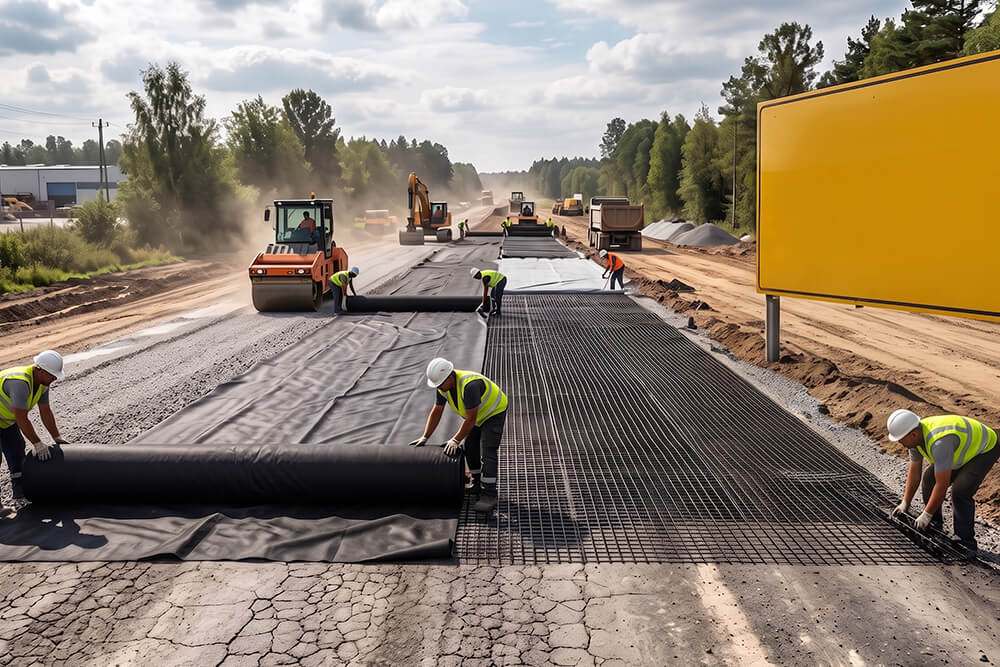
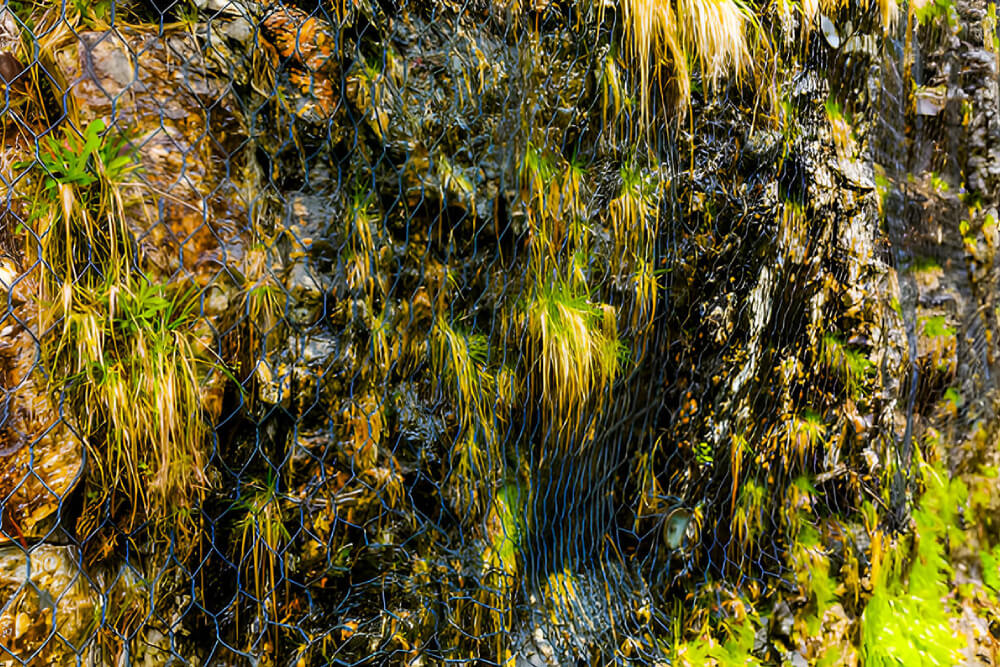
Geotextiles are widely used in civil engineering and infrastructure projects such as roads, railways, embankments, retaining structures, drainage systems, hydraulic works and environmental applications. The appropriate geotextile should be selected based on its required function, soil conditions, loading, hydraulic conditions and project design requirements.
Geotextiles are commonly used to provide one or more of the following functions: separation, filtration, drainage, reinforcement and protection. Selecting the appropriate type and properties is important to achieve the required long-term performance.
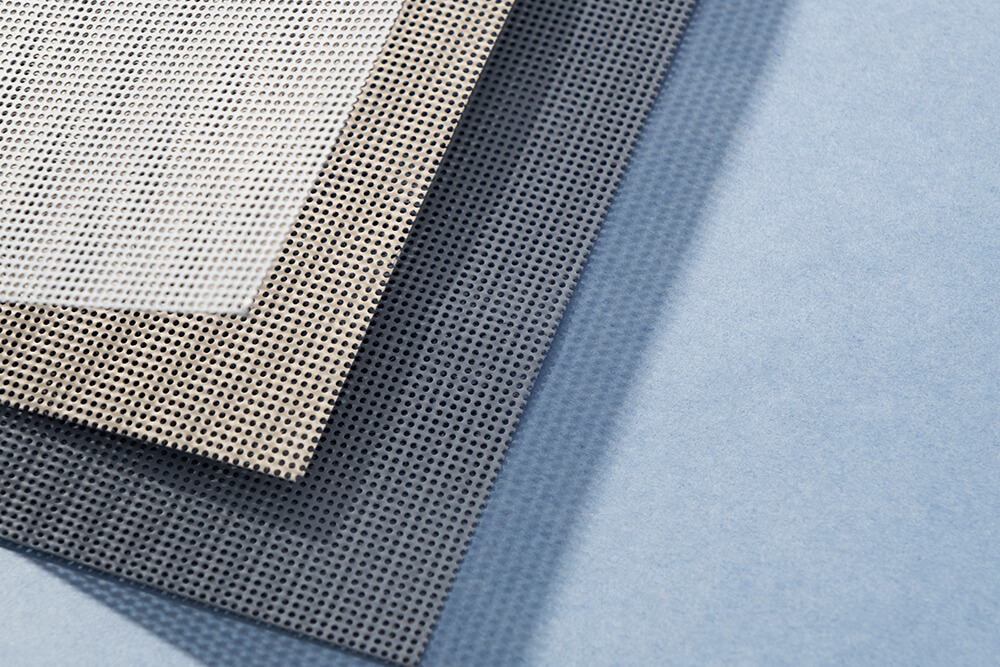
Geotextiles are generally classified according to their manufacturing method. The two main types used in civil and geotechnical works are nonwoven and woven geotextiles. Knitted geotextiles and geocomposites are also available for specific applications.
Nonwoven geotextiles are manufactured from synthetic fibres or filaments that are randomly arranged and bonded together, commonly by needle-punching or thermal bonding.
Needle-punched nonwoven: Fibres are mechanically entangled using barbed needles. These geotextiles are widely used for separation, filtration, drainage and protection, including beneath riprap and around drainage systems.
Thermally bonded / heat-bonded nonwoven: Fibres are bonded using heat. These products are generally thinner and more dimensionally stable than needle-punched nonwovens and can be used where specific filtration or separation properties are required.
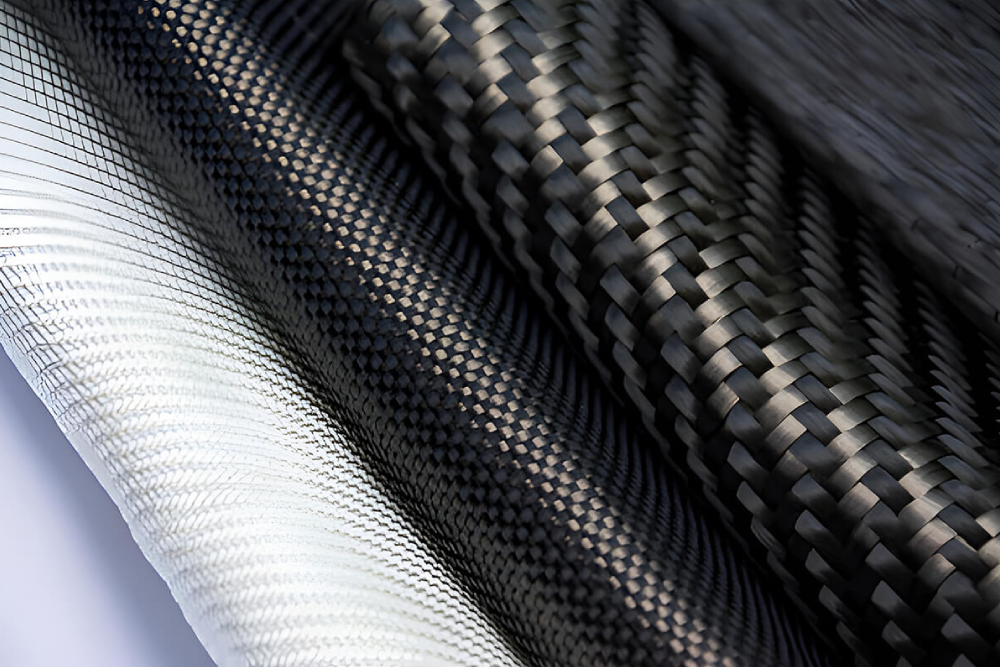
Woven geotextiles are manufactured by interlacing synthetic yarns or tapes in a controlled pattern, normally in the machine and cross-machine directions. Their properties depend on the yarn type, polymer, weave and manufacturing process.
Knitted geotextiles are manufactured by forming interlocking loops of synthetic yarn. They are less common than woven and nonwoven geotextiles in conventional earthworks, but can be used for specialised reinforcement, filtration, drainage or erosion-control applications.
Their flexibility and ability to conform to irregular surfaces can be useful in selected applications. The appropriate product should be selected based on the required tensile, hydraulic and durability properties.
Geocomposites combine two or more geosynthetic components to provide multiple functions within one product. Examples include a nonwoven geotextile bonded to a geogrid, drainage core or geomembrane.
Note: The above comparison is general only. Actual performance depends on the product specification, polymer, manufacturing process, mass per unit area, thickness, tensile properties, apparent opening size (AOS), permittivity, transmissivity, puncture resistance and other relevant parameters.
Geotextile selection should be based on the required engineering function and the conditions of the project. Key design considerations include but not limited to:
The selection of a geotextile should start with the required function—separation, filtration, drainage, reinforcement or protection—and then consider the soil, hydraulic conditions, loading, installation method and required design life.
There is no single geotextile type that is suitable for every application. Woven and nonwoven geotextiles each have different characteristics, while specialised knitted and geocomposite products can provide additional or combined functions. The final product should be selected based on the project design requirements and verified against the manufacturer's technical data.
NovaGeo Asia provides geosynthetic products and technical support for geotechnical and civil engineering applications. Our solutions cover separation, filtration, drainage, reinforcement, protection and other geosynthetic applications. For project-specific recommendations, product selection should be based on site conditions, design requirements and applicable project specifications.