Jor Dam Reservoir, Cameron Highlands, Malaysia

A high-volume sediment dewatering initiative ensuring eco-friendly effluent discharge and restored hydroelectric storage capacity within a highly constrained mountainous footprint.

Location

Cameron Highlands, Pahang, Malaysia

Product Grade

NovaTube NT125D Geotextile Tube

Primary Application

Dewatering Geotextile Tube

The Challenges Faced

Reservoir maintenance and desilting operations at hydroelectric dam sites present complex sediment management and environmental control challenges:

High-Volume Silt & Sediment Accumulation

Silt build-up reduces active reservoir capacity and threatens turbine intake efficiency, requiring large-scale desilting without disturbing power plant operations.

Logistical & Footprint Constraints

The mountainous terrain of Cameron Highlands limits available land for conventional dewatering lagoons or mechanical filter presses.

Strict Environmental Discharge Standards

Dredged slurry must be effectively dewatered so that clear effluent water can be safely discharged back into the natural watercourse without causing downstream turbidity or pollution.

The Solution

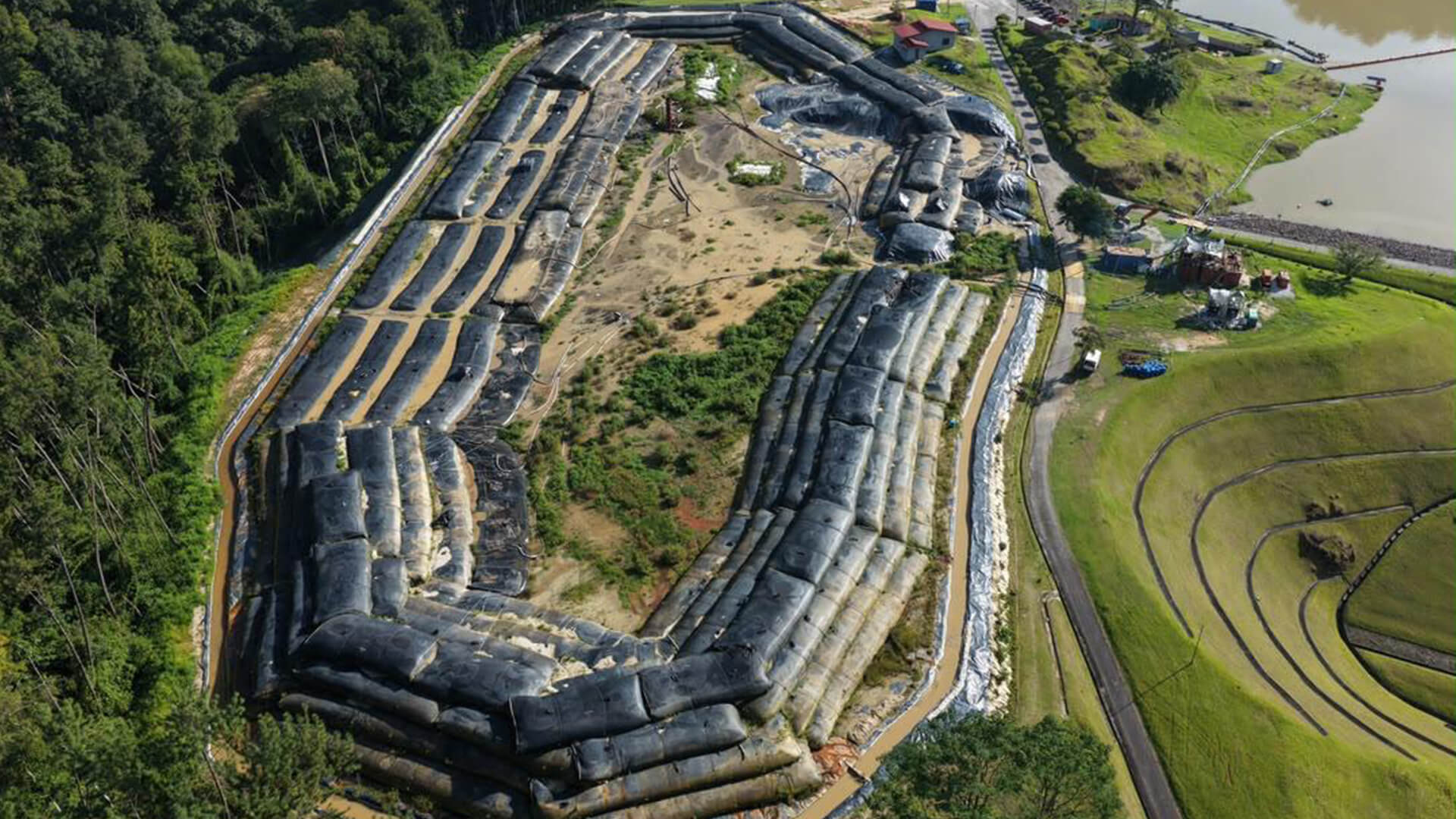
To efficiently contain, dewater, and consolidate large volumes of dredged sediment within a compact layout, NovaTube NT125D geotextile tubes were deployed on-site.
High-Efficiency Filtration & Dewatering

1

Engineered from specially woven high-strength filter fabric, NovaTube NT125D retains fine solid particles while allowing clear, filtered water to pass through its pores under pumping pressure.

High Pumping Capacity & Volume Containment

2

A total of 166 geotextile tube units were systematically filled with dredged slurry, utilizing available land efficiently by stacking and lining up the tubes safely.

High Pumping Capacity & Volume Containment

2

A total of 166 geotextile tube units were systematically filled with dredged slurry, utilizing available land efficiently by stacking and lining up the tubes safely.

Accelerated Desiccated Solid Reduction

3

Continuous passive dewatering reduced the total bulk volume of wet sediment into dry, manageable solid cakes, making handling and containment significantly more cost-effective.

The Result

Successful Silt Management

Efficiently dewatered massive quantities of reservoir sediment, helping restore water storage capacity for TNB's hydroelectric infrastructure.

Eco-Friendly Discharge

Delivered clean, filtered effluent water meeting environmental compliance standards before discharge into the surrounding ecosystem.

Optimized Land Usage

Maximize sediment containment within a restricted footprint, avoiding the high capital expenditure and land requirements of traditional dewatering methods.

Have a Similar Marine Project?

Consult with our geosynthetics engineers to design a custom turbidity control solution for your specific site conditions.